


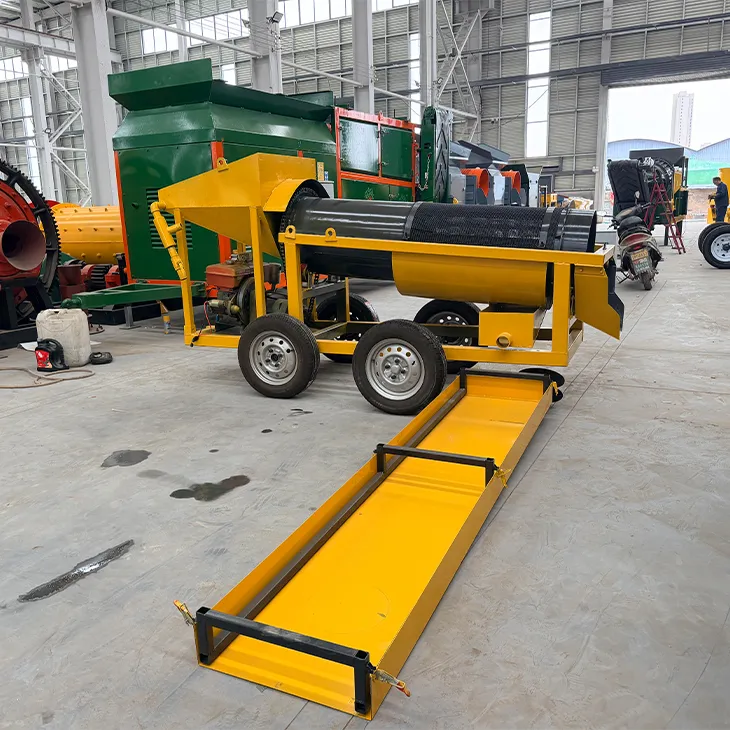

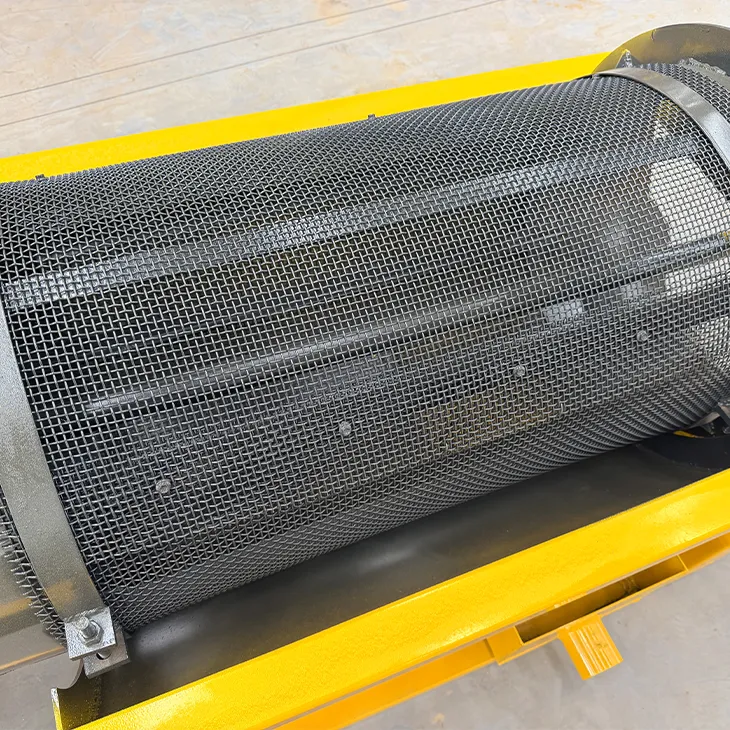

Gold Washing Process Plant
Model GMTS0519
Trommel Diameter(mm) 500
Trommel Length(mm) 1910
Capacity(t/h) 5-10
Power(kw) 1.5
Overall Dimension LWH(mm) 3000x1000x1800
Weight(kg) 550
Send Inquiry
Zhengzhou Sinolion Machinery Co., Ltd. is one of the most credible manufacturers and suppliers of gold washing process plant in China. Please feel free to buy high quality gold washing process plant for sale here from our factory. Good service and reasonable price are available.
Investing in a gold washing process plant requires balancing recovery efficiency, equipment durability, and operational costs. For placer mining operators, commercial buyers, and project managers, the primary goal is simple: maximize fine gold recovery while minimizing downtime and cost per ton of processed raw material.
Many mining operations fail not due to a lack of gold in the ground, but because the wash plant is improperly matched to the physical properties of the deposit. Clogging caused by sticky clay, fine gold losses in slurry tailings, and rapid wear on screen media are common operational bottlenecks that directly cut into profit margins.
This guide breaks down the essential factors buyers must evaluate when selecting, configuring, and purchasing a commercial gold washing process plant centered around trommel screening technology.


1. Essential Deposit Characteristics Buyers Must Assess First
Before requesting quotes or choosing equipment models, buyers must analyze three critical site variables. Equipment manufacturers require these parameters to engineer an accurate flowsheet.
Raw Deposit Sample Analysis Workflow:
- Clay Content (High / Medium / Low) ──► Determines Trommel Screen configuration (Standard Mesh vs. Extended Scrubbing Section)
- Gold Particle Size (Fine / Coarse) ──► Determines Gravity Separation equipment (Sluice Box vs. Centrifugal Concentrator)
- Water Supply (GPM or m³/h) ──► Determines Settling Pond and Water Recycling System requirements
Clay Content (The #1 Cause of Gold Loss)
- Low Clay / Loose Gravel: A standard trommel screen equipped with high-pressure internal spray bars is sufficient to wash gravel and liberate gold.
- High Clay / Sticky Plastic Mud: Standard screen meshes will blind quickly. Sticky clay forms "clay balls" that roll through the drum, wrapping around gold particles and carrying them straight into tailings. For high-clay deposits, configure the Trommel Screen with an Extended Blank Scrubbing Section at the feed end. Heavy internal lifter bars tumble and break down clay in high-pressure water before the slurry reaches the screening mesh.
Gold Particle Size Distribution
- Coarse Gold & Nuggets (> 2 mm): Sluice boxes with riffles and specialized carpet (Miners Moss) easily capture coarse particles through natural gravity settling.
- Fine & Flour Gold (< 0.5 mm / -200 mesh): Fine gold remains suspended in fast-flowing slurry water. Sluices alone can lose over 30% of fine gold. Processing fine gold requires primary centrifugal concentrators (such as Knelson-type or Falcon-type units) or hydraulic pulsating sluice boxes to force gold out of suspension.
Water Volume and Quality Requirements
A standard gold wash plant consumes between 2.0 to 3.5 cubic meters (m³) of water per ton of raw feed. If your mine site lacks a continuous river supply or high-yield borehole, your plant setup must incorporate settling ponds and a closed-loop water recycling system using slurry pumps.
2. Technical Specifications
| Model | Trommel Diameter (mm) | Trommel Length (mm) | Capacity (t/h) | Power (kw) | Overall Dimension L*W*H (mm) | Weight (kg) |
| GMTS0519 | 500 | 1910 | 5-10 | 1.5 | 3000x1000x1800 | 550 |
| GMTS1020 | 1000 | 2000 | 10-30 | 4 | 3390x1400x2140 | 1500 |
| GMTS1225 | 1200 | 2500 | 30-50 | 5.5 | 4146x1600x2680 | 2200 |
| GMTS1548 | 2000 | 4800 | 80-150 | 11 | 8460x2300x2500 | 6800 |
| GMTS1848 | 2000 | 4800 | 150-200 | 15 | 9860x2300x3420 | 7200 |
3. Plant Configuration Options: Matching Machinery to Deposit Types
Customizing the trommel configuration to your specific deposit yields a higher return on investment (ROI) than purchasing a generic "all-in-one" package.
| Deposit Type | Primary Washing & Screening | Fine Gold Trap | Secondary Dressing | Key Buyer Benefit |
| High-Clay Riverbed | Grizzly Feeder + Heavy-Duty Trommel Screen (with Scrubbing Section) | Centrifugal Concentrator | Shaking Table | Eliminates clay balls; recovers fine gold down to 200 mesh |
| Clean Gravel / Sand Deposit | Vibrating Hopper + Standard Trommel Screen | Pulsating Sluice Box + Fixed Sluice | Clean-up Sluice / Table | Low capital expenditure; high processing speed |
| Scattered / Short-Term Mines | Wheel-Mounted Mobile Trommel Wash Plant | Compact Centrifugal Unit / Sluice | Gemini Table | Fast site relocation; minimal civil engineering work |
Mobile vs. Skid-Mounted vs. Stationary Wash Plants
- Mobile (Wheel-Mounted or Tracked): Built around an integrated mobile trommel chassis. Best for operations processing scattered deposits along riverbanks or short-life reserves (< 100 TPH). Offers fast setup (1 to 2 days) and easy transport between concessions.
- Skid-Mounted: Offers a balance between mobility and structural rigidity. Heavy steel skids allow the trommel wash plant to be dragged across the mining site using a dozer or excavator without dismantling the frame.
- Stationary (Steel Structure on Concrete Foundations): Recommended for large-scale operations (> 150 TPH) with proven reserves lasting 3+ years. Utilizes large-diameter heavy trommel screens with multi-deck screening, providing maximum throughput and long-term structural durability.
4. Managing Operational Costs and Wear Components
Equipment longevity determines long-term profitability. High-abrasion sand and gravel wear down steel surfaces quickly, making wear-part management a primary buyer concern.
Plant Maintenance & Cost Control Strategy:
Wear Part Selection: High-Manganese Internal Lifters | Polyurethane or High-Carbon Steel Screen Mesh | High-Chrome Slurry Impellers
Power Management: Diesel-Electric Gensets | Variable Frequency Drives (VFD) | Sized Start-up Torque
Screen Media Selection: PU vs. High-Carbon Steel
While woven wire steel mesh is cheaper upfront, Polyurethane (PU) screen panels last 3 to 5 times longer when processing quartz-heavy gravel. PU screens resist blinding (clogging), absorb heavy impact, and lower maintenance labor costs over a single season.
Trommel Internal Lifters and Drum Liners
When processing gravel and boulders, the receiving un-punched section of the trommel screen takes massive impact. High-manganese steel liners (Mn13Cr2) or replaceable lifter bars should protect the internal shell. For fine sand, thick vulcanized rubber drum liners reduce operating noise, lower overall drum weight, and decrease power consumption on drive motors.
5. B2B Buyer Procurement Checklist
When evaluating manufacturer proposals, verify that the following technical parameters are clearly defined:
- Net Solids Capacity vs. Total Slurry Volume: Ensure the vendor specifies capacity in dry metric tons per hour (TPH) of raw feed, not total water-slurry mixture volume.
- Drive Systems: Look for heavy-duty rubber tire drives or chain gear drives on trommel screens to ensure smooth torque transfer under full load.
- Power Generator Sizing: Calculate total plant motor power (kW) and multiply by 1.25 to 1.5 to select a diesel generator capable of handling initial motor start-up surges.
- Spare Parts Package: Request a 1-year operational spare parts kit including spare screen meshes, spray nozzles, pump seals, bearings, and sluice carpets.
6. Frequently Asked Questions (FAQ)
Q1: How much water is required to operate a 100 TPH gold wash plant?
+
-
A 100 TPH plant typically requires 200 to 300 m³/h (approx. 880 to 1,320 GPM) of clean process water. If water availability is limited, setting up a multi-stage settling pond system with polyacrylamide (PAM) flocculant can recycle up to 85% of process water, reducing fresh water demand to 30–50 m³/h.
Q2: Why are sluice boxes losing fine gold, and how can recovery be fixed?
+
-
Sluice boxes lose fine gold when:
1. The slurry flow velocity is too fast, washing light gold particles over riffles.
2. The water-to-solid ratio is too low, causing black sand to compact carpet fibers.
3. The sluice box angle is set too steep (above 7 degrees).
To fix this, install a centrifugal concentrator ahead of the sluice box to process the fine slurry (-2 mm fraction), or upgrade to a hydraulic pulsating sluice that continuously agitates the bed to prevent compaction.
Q3: How do I choose the right Trommel Screen configuration for different clay conditions?
+
-
For loose gravel and low-clay deposits, a standard single-deck or double-deck trommel screen with internal spray bars is ideal. For sticky clay deposits, select a heavy-duty trommel screen equipped with an extended solid drum scrubbing section at the feed end and heavy internal lifter bars to thoroughly break down clay balls in high-pressure water before material enters the screening mesh.
Q4: How often should sluice box carpets be cleaned during operation?
+
-
Cleanup frequency depends on the concentration of heavy minerals (black sand, magnetite, hematite) in your deposit.
- High black sand areas: Clean primary sluice carpets every 2 to 4 hours to prevent bed saturation.
- Low black sand areas: Clean carpets every 6 to 8 hours or at the end of each operational shift.
Q6: What power options are best for remote placer mining operations?
+
-
For remote sites off the grid, a centralized diesel generator set (Genset) powering electric motors for individual equipment is superior to direct diesel engine drives. Electric drives equipped with Variable Frequency Drives (VFDs) allow operators to adjust the rotation speed of the trommel screen to match changing feed conditions while lowering overall fuel consumption.
Global Customer Project Sites
Pictures of practical application cases of gold ore washing and processing plant

Ghana

Mali

Burkina Faso
Order Fulfillment Scenario








Honor and qualification
Official certification, professional after sales service.

Patent Certificate

Patent Certificate

Patent Certificate

Patent Certificate

CE
About Us
At Sinolion Machinery, we believe manufacturing heavy equipment is about more than just assembling steel components - it is about forging enduring partnerships and solving your most complex material extraction challenges. Located in the heart of Zhengzhou, China's premier industrial hub, we have been exporting high-performance processing systems to international markets with absolute dedication, strict precision, and relentless power.
30+
YEARS HISTORY
500+
EXPORT VOLUME
100+
COUNTRIES
100+
GLOBAL PARTNERS
Hot Tags: gold washing process plant, China, manufacturers, suppliers, factory, price, for sale, Efficient Rotary Garbage Sorting Drum Screen, Convenient Firewood Trommel Screen, Permanent Iron Separator, Gold Recovery Washing Plant, 5 10t h Gold Mining Trommel Screen, Mini Portable Gold Mining Placer
You May Also Like


Send Inquiry
Categories
Latest Products


Contact Us