


Gold Washing Centrifuge
A gold washing centrifuge does the one job a sluice cannot finish: it pulls the fine and flour gold out of the tailings stream and upgrades it into a small, high-grade concentrate. This design discharges that concentrate automatically instead of stopping the machine for a manual wash-out, which is where most of the labour and gold loss used to happen. It drops into an existing wash plant with water and power connections.
Tel: +8615515531291 · Email: zzsinolion02@163.com · Zhengzhou Sinolion Machinery Co., Ltd
What the Automatic Discharge System Changes
A gold washing centrifuge works the same way as any bowl concentrator: spinning slurry throws gold outward while lighter sand washes over the lip. What changed here is what happens next. On older models, recovering the concentrate meant shutting the machine down, opening it up and washing the bowl out by hand - the work was discontinuous, the wash-out was messy, and every interruption cost both labour and a little gold. This concentrator carries an automatic discharge system with an automatic control cabinet: press start and stop, and the machine handles the rest. Because the discharge runs as a closed operation, man-made concentrate loss during clean-out disappears.

Model Range at a Glance
Built across five bowl sizes: feed from roughly 0.6 t/h to 80 t/h · drive power 0.75 kW – 22 kW · fluidisation water ≈2 – 80 m³/h.
The full parameter sheet (feed size, slurry water, cleaning cycle, concentrate weight per clean-out, shipping weight and dimensions) sits with the model-selection material on the Gold Centrifugal Concentrator page. Tell us your tonnage and we will point you at the right row.
Built to Stay Running: Vibration, Wear and Uptime
Two details decide whether a concentrator survives a working season. The first is vibration: this unit mounts its shock points on soft materials rather than metal-to-metal, so the machine runs quieter and the bearing and bowl assemblies last longer. The second is drive access: the motor sits outside on the frame with a belt drive, which means a belt or bearing swap is a workshop job of an hour, not a teardown. Wear parts are the ones you would expect - bowl, riffles and the discharge valve body - and they are supplied matched to the model.

Performance: 99% Recovery and a 1,000× Concentrating Ratio
Two numbers describe what a centrifuge gives you back. Recovery is how much of the free gold in the feed it catches; on this machine, site results are reported at up to 99% on suitable placer feed, and on lode ore testing the figures published are 98% at -0.074 mm and 97% at 0.04 mm. Concentrating ratio is the other half of the story: at up to 1,000×, a large volume of dilute slurry leaves behind a very small, very rich parcel of concentrate - which is what makes the smelting or table clean-up step cheap. Both figures are company test and site data: your ore, its size distribution and its liberation will set the final numbers, and we will state what we expect for your feed before you buy rather than after.

What It Costs to Run
The operating profile is deliberately modest. Water demand is low and mostly recirculated through the plant; the drive is a small electric motor or a diesel set on remote ground; there are no reagents at all, so there is no chemical bill, no dosing system and nothing to store on site. Footprint is compact enough to sit beside an existing sluice or under a screen, and the integral frame means no foundation work - a flat pad, a fluidisation water line and a power connection, and the machine is running. On a typical small placer operation the published payback is around half a year, which is the reason these units are usually the first upgrade added to a working wash plant.
Where It Goes in a Wash Plant
There are three placements that make sense, and all three are worth checking before you buy. Behind the sluice: the centrifuge treats what the carpet let go, which is usually the fine gold the sluice could never hold. On tailings: where old dumps were worked with sluices only, a centrifuge campaign often still pays. Behind a mill in lode circuits: for hard-rock gold, it replaces the amalgamation plate in the flowsheet. In every case the tailings return to the line, so nothing is taken out of production while the concentrator is working.

Getting It Delivered and Running
Export packing puts the machine on a steel frame beneath waterproof cover, and we draw the container loading plan for your order - 20 ft or 40 ft, quoted FOB, CIF or DDP as you prefer. Every machine is dispatched with its test report and an outgoing-inspection video, carries a 12-month warranty on the main unit, and is backed by parts supply for as long as it works. Set-up help arrives as a video walk-through or a visit from one of our engineers, and we train your operators while we are on site. Orders start at a single machine: one standard unit clears the works in about two weeks, and buying two or three together runs to roughly a month.
Gold Washing Centrifuge FAQ
Q: 1. Where is a gold washing centrifuge used?
A: To catch and upgrade the fine gold that gravity equipment upstream cannot hold. It sits behind a trommel screen or sluice box, on re-worked tailings, or behind a mill in a lode circuit, and turns a dilute tailings stream into a small high-grade concentrate.
Q: 2. What makes this unit different from older concentrators?
A: The bowl and the physics are the same; the difference is the discharge. This machine empties the concentrate automatically through its control cabinet instead of being stopped for a manual wash-out, which keeps the plant running and removes the loss that hand-cleaning causes.
Q: 3. How much gold will it actually catch?
A: Site data for this unit reports up to 99% on suitable placer feed, with lode-ore tests at 98% for -0.074 mm and 97% at 0.04 mm. Read those as the machine's capability rather than a promise for your ground - describe your feed and the quotation will carry an expected range.
Q: 4. What does a 1,000× concentrating ratio mean in practice?
A: It means the machine shrinks a very large volume of slurry into a very small parcel of rich concentrate. Downstream clean-up - shaking table, pan or furnace - then handles kilograms instead of tonnes, which is where a lot of the cost saving comes from.
Q: 5. What water and power supply does it need on site?
A: Both are modest by concentrator standards, and most of the water is recirculated through the plant. Exact figures follow the model; the fluidisation water line is the one connection that matters most, and it must be clean.
Q: 6. Are chemicals or mercury involved?
A: No. The separation is purely gravity in a water fluidised bed - no reagents, no amalgamation. That is the reason this unit is often specified where mercury use is being phased out.
Q: 7. Which sizes are available, and how do I choose?
A: Five bowl sizes span roughly 0.6 t/h to 80 t/h of feed. Choose on the tonnage of the stream you intend to treat, not on the size of your whole plant - the tailings stream is usually a fraction of the plant feed.
Q: 8. What does routine maintenance involve?
A: Belt and bearing checks along the drive, valve and discharge inspection, and a look at the bowl wear surfaces at each service. Wear parts are supplied model-matched, and belt or bearing replacement is done from outside the machine without dismantling the bowl.
Q: 9. Can I order just one unit, and how long would it take?
A: We accept a single machine as the smallest order. Expect around 15 days for one standard unit and about 30 days for two or three together; custom configurations get their own schedule once the build is agreed.
Q: 10. What do you need from me to quote?
A: Tell us the feed (placer sand, tailings or milled ore), the tonnage of the stream to be treated and your site power. You get back a named model, its configuration and a factory price - with the expected recovery range stated.
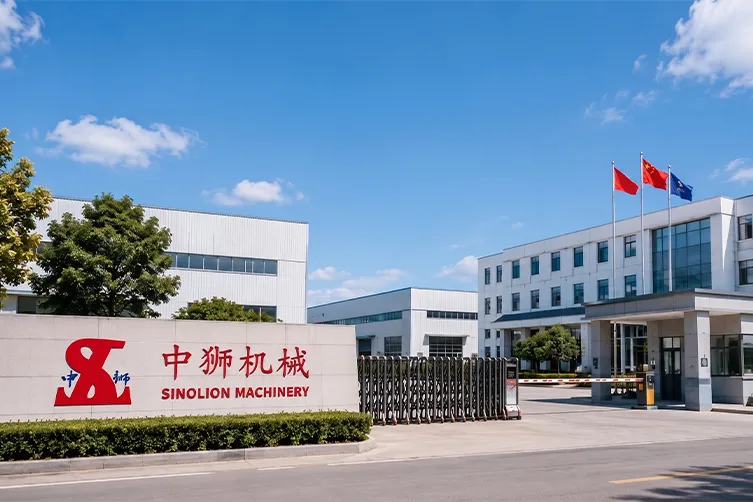
About Us
Zhengzhou Sinolion Machinery Co., Ltd. has manufactured gold washing and screening equipment for 12 years and shipped trommel plants to customers in Africa, South America, Southeast Asia, the Middle East, etc. If you are planning an ore washing project, tell us the tonnage and ore type - we will come back with a concrete plant proposal and factory price.
YEARS HISTORY
EXPORT VOLUME
COUNTRIES
GLOBAL PARTNERS
Related Equipment
- Gold Centrifugal Concentrator - full STLB parameter sheet and model selection
- Gold Wash Machine - how to choose between trommel and scrubber types
- Mobile Gold Washing Trommel - the GMTS trailer lines the centrifuge bolts onto
- Gold Sand Separator Machine - high-mud placer lines with dual-channel recovery
- GMTS0519 Small-Scale Gold Production Line - the 5-10 t/h entry line
Zhengzhou Sinolion Machinery Co., Ltd. is one of the most credible manufacturers and suppliers of gold washing centrifuge in China. Please feel free to buy high quality gold washing centrifuge for sale here from our factory. Good service and reasonable price are available.
Hot Tags: gold washing centrifuge, China, manufacturers, suppliers, factory, price, for sale, Branch Shredder, Placer Gold Separating Machine, Mini Trommel Gold Washing Plant, mini gold trommel wash plant full kit, HOT Compost Trommel Screen, Mobile Type Gold Rotary Trommel


