

Chemical extraction methods like cyanidation involve high operating costs, complex permitting, and severe environmental liabilities. For alluvial and placer gold deposits, gravity beneficiation offers a clean, highly efficient, and cost-effective alternative. Because placer gold has already been naturally liberated from host rock over millions of years, physical separation based on density differences delivers the highest return on investment.

The Physics and Principle of Gravity Separation
Gravity separation utilizes the sharp density contrast between native gold and lighter gangue materials (such as quartz, sand, and clay).

Density Differentiation
Pure gold has a specific gravity of approximately 19.3g/cm³ , whereas common waste minerals (quartz, feldspar, silicates) range between 2.6 and 2.7g/cm³. In a dynamic water slurry, this massive density ratio causes gold particles to settle rapidly, while lighter minerals remain in suspension and wash away.
Particle Size and Shape Dynamics
While density is the driving force, hydraulic behavior is also influenced by shape (flaky vs. spherical) and particle size. Proper size classification is critical to prevent coarse light gravel from behaving like fine heavy gold.


| Mineral | Specific Gravity (g/cm³) | Behavior in Water Slurry |
| Gold | 15.0 – 19.3 | Settles immediately; resists water flow |
| Magnetite | 5.0 – 5.2 | Settles moderately fast (heavy sand) |
| Pyrite | 4.9 – 5.1 | Settles moderately fast |
| Quartz / Sand | 2.6 – 2.7 | Settles slowly; easily carried away by slurry flow |
Core Stages of a Placer Gold Washing Plant
An industrial placer gold operation is an integrated circuit designed to wash, classify, and concentrate gold progressively without bottlenecks.
Stage 1: Feeding and Trommel Washing/Screening
Heavy clay balls and compacted gravels are introduced into a heavy-duty trommel screen equipped with high-pressure water spray bars. The tumbling action breaks down sticky clays and washes the gravel, separating oversized barren rocks (+10–20 mm) from the gold-bearing slurry (-10 mm).
Stage 2: Primary Bulk Concentration
The under-screen slurry flows directly to high-capacity primary recovery units, such as pulsating jigs, centrifugal concentrators, or specialized sluice systems, capturing 80–90% of the free gold.
Stage 3: Concentrate Upgrading
The low-volume, medium-grade concentrate collected from primary units is fed to a shaking table for final gravity finishing.
Stage 4: Smelting
The clean, high-grade concentrate is dried, fluxed, and melted down into commercial gold doré bars.
Equipment Selection: Matching Machinery to Particle Size
No single machine captures every size of gold with equal efficiency. Maximizing total recovery requires pairing the right machine with the target particle size fraction.
| Equipment Type | Target Particle Size | Key Strengths | Operational Role |
| Trommel Screen | All incoming feed | Disintegrates clays, washes gravel, separates waste rocks | Front-end washing & sizing |
| Jigging Machine | 1 mm – 15 mm | High processing capacity, low water & power consumption | Primary rougher for coarse gold |
| Centrifugal Concentrator | 0.01 mm – 2 mm (Fine/Flour gold) | Generates up to 60–100G centrifugal force to capture micro-gold | Fine gold recovery unit |
| Sluice Box (with Gold Carpet) | 0.5 mm – 6 mm | Zero power requirement, simple operation | Auxiliary scavenger / capture |
| Shaking Table | 0.02 mm – 2 mm | Produces distinct separation bands for pure concentrate | Final stage upgrading / finisher |
Troubleshooting: Why Fine Gold Is Lost in Tailings
Coarse gold nuggets are easy to trap, but microscopic and flaky "flour gold" is frequently lost to the tailings pond. The main causes and solutions include:

1. Slurry Viscosity & Clay Binding: Sticky clays turn the slurry into a dense fluid, preventing fine gold specks from settling.
- Solution: Increase washing intensity inside the trommel screen using internal re-circulating lifters and high-pressure jet manifolds, ensuring total clay disintegration before concentration.
2. Lack of Enhanced Gravity for Micro-Particles: Standard sluice boxes and jigs rely solely on 1G natural gravity, which is insufficient to overcome the water surface tension on fine gold flakes (<100 microns).
- Solution: Route the fine underflow (typically -2mm) to a semi-continuous or fully automated Centrifugal Concentrator.
3. Turbulent Water Balance: Excessive water volume washes fine gold straight out of the collection mats.
- Solution: Install a dewatering hydrocyclone or slurry distribution box to stabilize flow speed across gravity tables and jigs.
Equipment Configuration: Standard 500 TPD Placer Gold Line
A standard 500 Ton-Per-Day (approx. 25–35 m³/h) placer gold production plant requires a coordinated equipment flowsheet:
| Process Step | Recommended Equipment | Specifications / Scope |
| Raw Feeding | Hopper with Grizzly Screen | 50–100 mm grizzly bar spacing to reject giant boulders |
| Washing & Sizing | Mobile / Stationary Trommel Screen | Heavy-duty drum with internal water pipes & double-layer screen |
| Primary Separation | Mineral Jig Separator (Rougher) | High-stroke diaphragm jig for coarse-to-medium gold |
| Fine Recovery | Centrifugal Concentrator | Recovers fine flour gold (down to 200 mesh / 74 microns) |
| Tailings Scavenging | High-Velocity Sluice Run | Fitted with specialized gold-catching turf for safety recovery |
| Concentrate Cleaning | 6-S Shaking Table | Industrial-grade table deck for multi-mineral separation |
| Water Supply & Power | Slurry Pumps & Diesel Generator Set | High-pressure water pump and closed-circuit slurry handling |
Placer Gold vs. Hard Rock Gold Processing
| Parameter | Placer Gold Line | Hard Rock Gold Plant |
| Gold Liberation | Natural erosion (Free milling) | Mechanical (Crushing & Grinding required) |
| Front-End Machinery | Trommel Screen, Sluice | Jaw Crusher, Cone Crusher, Ball Mill, Cyclones |
| Energy Consumption | Low (Washing & pumping only) | Extremely high (Grinding power consumption) |
| Capital Investment (CAPEX) | Low to Moderate | High to Very High |
| Process Complexity | Direct washing and gravity recovery | Multi-stage comminution + gravity / flotation / CIL |
Refining: From Shaking Table Concentrate to Gold Doré
Gravity concentrate from shaking tables typically achieves a gold grade of 20% to 80%, mixed with heavy magnetic sands (magnetite, ilmenite, zircon).
Magnetic Demineralization
Pass the table concentrate through a magnetic separator to remove magnetite and iron trash.
01
Flux Formulation
Blend the dried concentrate with smelting fluxes (Borax, Sodium Carbonate, Silica Sand, and Nitre) to dissolve gangue minerals.
02
Furnace Smelting
Heat the mixture to 1150 °C-1200 °C in a tilting induction or gas-fired melting furnace. The impurities bind into molten slag on the surface.
03
Pouring the Ingot
Pour the molten charge into pre-heated cast-iron molds. The heavy molten gold settles instantly to the bottom, forming a clean Gold Doré Bar upon cooling.
04
Placer Gold Plant Investment Guidelines
Project costs scale depending on capacity, clay concentration, and mobilty requirements (skid-mounted, wheeled, or stationary).
| Operation Scale | Processing Capacity | Estimated Equipment Budget (USD) | Standard Equipment Scope |
| Small-Scale / Exploration | 5 – 20 TPH | $15,000 – $45,000 | Mobile Trommel + Sluice + Small Shaking Table |
| Medium Commercial | 50 – 100 TPH | $60,000 – $180,000 | Grizzly Hopper + Heavy Trommel + Jig + Centrifuge + Tables |
| Large Industrial | 200 – 500 TPH | $220,000 – $650,000+ | Complete Plant: Dual-Drum Trommels, Multiple Jigs, Centrifuges, Tailings Dewatering |
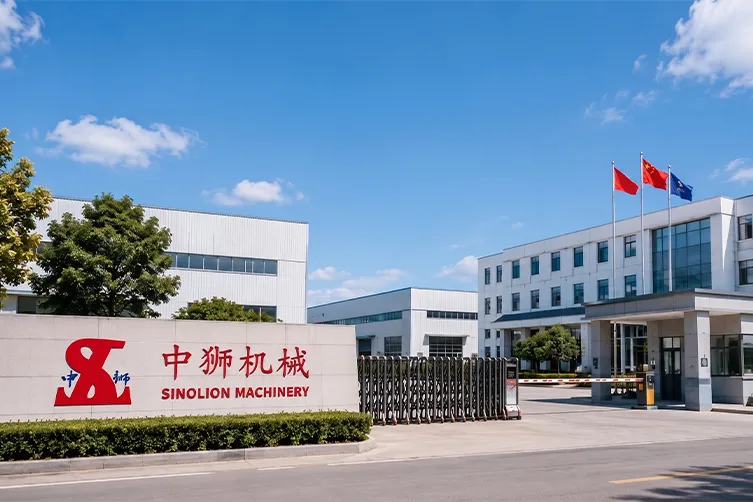
About Us
At Sinolion Machinery, we believe manufacturing heavy equipment is about more than just assembling steel components - it is about forging enduring partnerships and solving your most complex material extraction challenges. Located in the heart of Zhengzhou, China's premier industrial hub, we have been exporting high-performance processing systems to international markets with absolute dedication, strict precision, and relentless power.
YEARS HISTORY
EXPORT VOLUME
COUNTRIES
GLOBAL PARTNERS


