

As a supplier of Sand Trommel Screens, I've had numerous conversations with customers about how different factors impact the performance of these machines. One of the most frequently asked questions is about the relationship between the rotation speed of a Sand Trommel Screen and its performance. In this blog, I'll delve into this topic, exploring how rotation speed affects various aspects of the screen's operation and why it's a crucial consideration for anyone in the market for a Sand Trommel Screen.
Understanding the Basics of a Sand Trommel Screen
Before we dive into the impact of rotation speed, let's briefly review what a Sand Trommel Screen is and how it works. A Sand Trommel Screen is a cylindrical screening device that rotates on its axis. It is commonly used in industries such as mining, construction, and recycling to separate different-sized particles in a material stream. The screen consists of a series of concentric cylinders with different mesh sizes, allowing smaller particles to pass through while larger ones are retained and discharged at the end of the drum.
The Impact of Rotation Speed on Screening Efficiency
One of the primary ways rotation speed affects the performance of a Sand Trommel Screen is through its impact on screening efficiency. Screening efficiency refers to the ability of the screen to separate particles of different sizes accurately. A higher rotation speed can increase the agitation of the material inside the drum, causing particles to move more freely and increasing the likelihood of smaller particles passing through the mesh. This can lead to a higher percentage of fine particles being separated from the larger ones, resulting in a more efficient screening process.
However, there is a limit to how much the rotation speed can be increased before it starts to have a negative impact on screening efficiency. If the rotation speed is too high, the material may not have enough time to interact with the mesh properly, and some particles may be carried over the screen without being screened. Additionally, a high rotation speed can cause the material to bounce around inside the drum, leading to uneven distribution and potentially reducing the overall screening efficiency.
The Effect of Rotation Speed on Capacity
Another important aspect of a Sand Trommel Screen's performance is its capacity, which refers to the amount of material that the screen can process in a given period. The rotation speed of the screen plays a significant role in determining its capacity. A higher rotation speed generally means that the material moves through the drum more quickly, allowing the screen to process a larger volume of material in a shorter amount of time.
However, similar to screening efficiency, there is a balance to be struck when it comes to rotation speed and capacity. If the rotation speed is too high, the material may not be properly screened, and the screen may become overloaded, leading to a decrease in capacity. On the other hand, if the rotation speed is too low, the material may move through the drum too slowly, resulting in a lower capacity.
Impact on Wear and Tear
The rotation speed of a Sand Trommel Screen also has an impact on the wear and tear of the machine. A higher rotation speed can increase the friction between the material and the screen mesh, as well as between the material and the internal components of the drum. This can lead to increased wear on the screen mesh, bearings, and other parts of the machine, reducing its lifespan and increasing maintenance costs.
To minimize wear and tear, it's important to choose an appropriate rotation speed based on the characteristics of the material being screened and the design of the screen. Additionally, regular maintenance and inspection of the screen can help identify and address any issues before they become major problems.
Finding the Optimal Rotation Speed
So, how do you determine the optimal rotation speed for your Sand Trommel Screen? The answer depends on several factors, including the type and size of the material being screened, the desired screening efficiency and capacity, and the design and specifications of the screen.
In general, it's recommended to start with a lower rotation speed and gradually increase it while monitoring the performance of the screen. You can use a variety of methods to measure screening efficiency and capacity, such as taking samples of the screened material and analyzing them for particle size distribution. By adjusting the rotation speed based on the results of these measurements, you can find the optimal speed that maximizes screening efficiency and capacity while minimizing wear and tear.
Other Considerations
In addition to rotation speed, there are several other factors that can affect the performance of a Sand Trommel Screen. These include the mesh size of the screen, the slope of the drum, the feed rate of the material, and the moisture content of the material. It's important to consider these factors in conjunction with rotation speed when optimizing the performance of your screen.
For example, a finer mesh size will generally result in a higher screening efficiency but a lower capacity. Similarly, a steeper slope of the drum can increase the speed at which the material moves through the screen, but it may also reduce the amount of time the material has to interact with the mesh. By carefully considering these factors and making adjustments as needed, you can ensure that your Sand Trommel Screen is operating at its best.
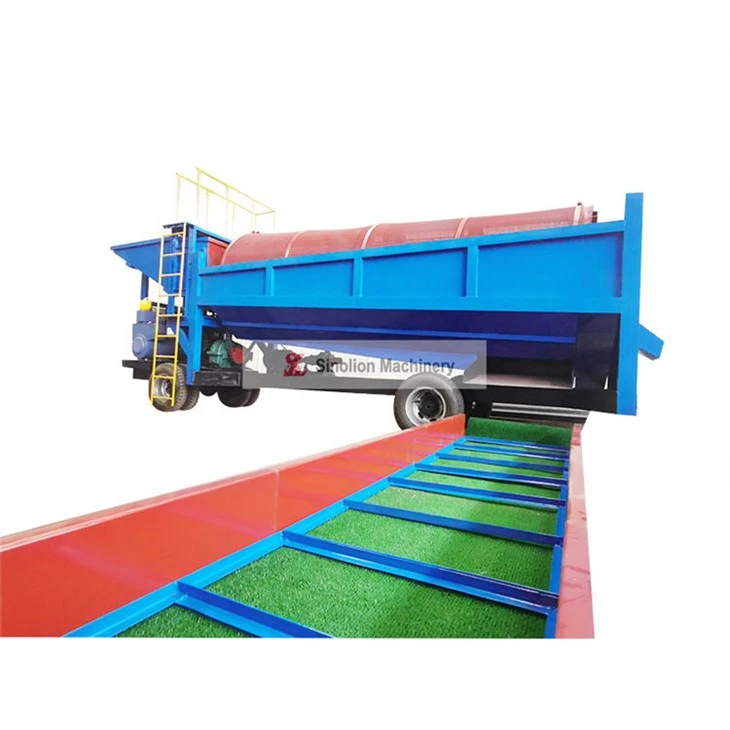

Related Products
If you're in the market for a Sand Trommel Screen or other related equipment, we offer a range of high-quality products to meet your needs. Check out our Organic Wasting Plastic Trommel, 80 - 150tph Gold Washing Plant, and Gold Screening Plant for more information.
Conclusion
In conclusion, the rotation speed of a Sand Trommel Screen is a critical factor that can significantly impact its performance. By understanding how rotation speed affects screening efficiency, capacity, and wear and tear, you can make informed decisions about the optimal speed for your specific application. Remember to consider other factors such as mesh size, slope, feed rate, and moisture content when optimizing the performance of your screen.
If you have any questions or would like to learn more about our Sand Trommel Screens or other products, please don't hesitate to contact us. We're here to help you find the right solution for your screening needs and ensure that you get the best possible performance from your equipment.
References
- Smith, J. (2018). Principles of Screening in Mineral Processing. Mining Journal.
- Johnson, A. (2019). Optimizing Trommel Screen Performance. Aggregates Business Magazine.
- Brown, C. (2020). The Impact of Rotation Speed on Industrial Screening Equipment. Engineering Today.


