

Hey there! As a supplier of compost sieves, I've seen firsthand how these nifty tools can really transform the texture of compost. In this blog, I'm gonna break down exactly how a compost sieve impacts that all - important compost texture.
First off, let's talk about what compost is. Compost is basically decomposed organic matter. It's like that magic ingredient for your garden. You throw in things like food scraps, leaves, and grass clippings, and over time, with the help of microorganisms, it turns into this rich, dark, and crumbly substance. But not all compost comes out perfect right away. That's where the compost sieve steps in.
The Basics of a Compost Sieve
A compost sieve is a simple yet effective tool. It's usually a frame with a mesh or perforated material stretched across it. The size of the holes in the mesh can vary, and this variation is crucial as it determines what passes through and what gets left behind.
When you use a compost sieve, you're essentially separating the good stuff from the not - so - good stuff. The larger, undecomposed pieces that are still chunky and haven't fully broken down get caught in the sieve, while the fine, well - decomposed compost falls through. This separation process is key to improving the texture of the compost.
Impact on Particle Size
One of the most obvious ways a compost sieve impacts texture is by controlling the particle size. Without sieving, your compost might have a mix of large chunks and fine particles. These large chunks can be a problem. They don't mix well with soil, and they can take a long time to fully break down. When you sieve the compost, you're getting rid of those big pieces.
For example, if you have a compost pile with some large branches or chunks of wood that haven't decomposed completely, the sieve will catch them. What you're left with is a more uniform compost made up of smaller particles. This uniform particle size gives the compost a smoother, more consistent texture. It spreads easily in the garden and mixes well with the soil, which is super important for plant growth.
Aeration and Drainage
The texture of compost also affects its aeration and drainage properties. A compost with a good texture allows air and water to move through it easily. When you use a compost sieve to remove the large, clumpy pieces, you're creating more space within the compost. This space allows air to circulate, which is essential for the continued decomposition process and for the roots of plants to breathe.
In terms of drainage, a well - sieved compost won't hold onto excess water. The fine particles are arranged in a way that allows water to pass through quickly, preventing waterlogging. This is especially important in areas with heavy rainfall or in potted plants where proper drainage is crucial.
Homogeneity
Another aspect of texture that a compost sieve improves is homogeneity. Homogeneous compost means that all parts of it have a similar composition and texture. When you sieve the compost, you're ensuring that there aren't any pockets of large, undecomposed material mixed in with the fine, decomposed stuff.
A homogeneous compost is more reliable for gardening. You know exactly what you're getting, and you can expect consistent results when you use it. Whether you're using it for potting soil, mulching, or as a soil amendment, a homogeneous compost will perform better and give your plants a more stable environment to grow in.
Different Types of Compost Sieves and Their Impact
There are different types of compost sieves available, and each can have a slightly different impact on the texture of the compost. For example, a hand - held sieve is great for small - scale gardening. It's easy to use and allows you to have more control over the sieving process. You can sift the compost slowly, making sure you catch all the large pieces.
On the other hand, larger, mechanical sieves are suitable for commercial composting operations. These sieves can process a large amount of compost quickly. They often have adjustable mesh sizes, which means you can customize the particle size of the final compost according to your needs.
Compost Sieves in the Context of Related Products
If you're into composting on a larger scale, you might also be interested in related products like the C and D Waste Picking Line. This line is designed to handle construction and demolition waste, which can be a source of materials for composting. It helps in separating different types of waste, making it easier to turn them into usable compost.
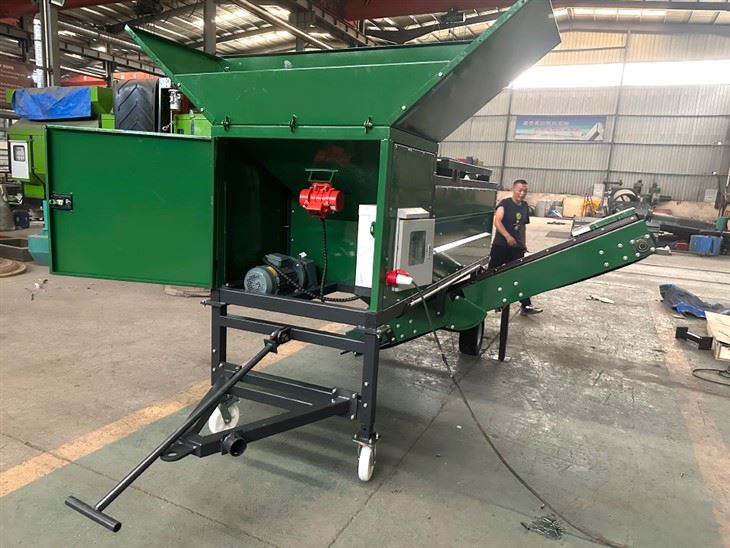

The Construction Waste Roller Screen is another useful tool. It can screen construction waste, removing large debris and leaving behind materials that can be composted. This can contribute to creating a more diverse and nutrient - rich compost.
And for those looking for a soil sifter, the WTS0820 Trommel Soil Sifter can be a great addition. It can sift soil and compost, ensuring a fine texture that's perfect for planting.
Why It Matters for Gardening
The texture of compost matters a great deal in gardening. Plants need a well - textured growing medium to thrive. A compost with a smooth, consistent texture provides a good foundation for plant roots. It allows roots to penetrate easily, access nutrients, and grow strong.
When you use a compost sieve to improve the texture of your compost, you're essentially giving your plants a head start. You're creating an environment where they can absorb water and nutrients more efficiently, which leads to healthier, more productive plants.
Conclusion
In conclusion, a compost sieve has a significant impact on the texture of compost. It controls particle size, improves aeration and drainage, enhances homogeneity, and overall makes the compost more suitable for gardening. Whether you're a small - scale gardener or a large - scale composting operation, using a compost sieve is a smart move.
If you're interested in improving the texture of your compost and taking your gardening to the next level, we've got a wide range of high - quality compost sieves to suit your needs. Whether you need a simple hand - held sieve or a large, industrial - grade one, we can help. Don't hesitate to reach out to us for more information and to start a procurement discussion. Let's work together to create the perfect compost for your plants!
References
- Composting Basics, University Extension Services
- Gardening Handbook for Soil and Compost Management


