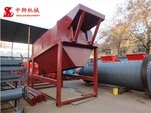


When processing placer gold (often referred to as sand gold), the foundational step before any complex extraction begins is washing and screening. Effective pre-processing separates large, barren rocks from valuable minerals, significantly minimizing wear and tear on downstream beneficiation equipment. By discarding this waste rock early, mining operations can drastically improve their overall processing capacity and working efficiency.

The Geological Formation of Placer Gold Deposits
To understand the extraction process, it is helpful to know how placer gold is formed. Originating from mountainous gold veins, the ore is exposed to the elements and breaks down into gold grains, flakes, and fine powder through centuries of weathering and erosion.
These particles are naturally transported by wind and flowing water. Over time, they settle and accumulate in riverbeds, lakesides, and coastal areas, forming alluvial and diluvial placer gold deposits. Depending on the geographical movement, these exogenous gold deposits can be categorized as residual or slope deposits. While their formation dates back to various geological eras, the primary goal for modern miners remains the same: separating the valuable gold from the surrounding sand and soil.
Why Pre-Screening is the Core of Placer Gold Washing
In a typical sand gold mining site, large river pebbles and stones contain absolutely no gold. However, these barren rocks can make up anywhere from 20% to 80% of the total raw material.
If this material enters the main processing line unclassified, it wastes immense amounts of energy and reduces the efficiency of the entire plant. Therefore, the first and most critical process is screening. Utilizing robust equipment like trommel screens or heavy-duty vibrating screens effectively isolates this waste rock in advance. This ensures that only high-potential, fine materials proceed to the next stage, maximizing the effective operation rate of the production line.
Handling Clay and Mud: Washing and Gravity Separation
The optimal equipment for washing and separating depends heavily on the composition of the raw ore:
● High Mud Content: If the sand gold ore contains a large amount of sticky clay, the fine gold particles can easily become trapped inside the mud. To liberate these particles, a cylindrical washing machine (such as a rotary scrubber or gold trommel) is essential. These machines wash the ore and screen it simultaneously, breaking down the tough clay.
● Low Mud Content: For materials with minimal clay, the ore can be screened directly and sent straight into the gravity separation process.

Optimizing the Gravity Separation Process
Most sand gold recovery operations rely on gravity separation.
● Jig Machines: For high-grade placer gold mines, jigs are highly recommended as roughing equipment because they guarantee a superior recovery rate.
● Gold Wash Chutes: For low-grade deposits where processing massive volumes is the priority, chutes are ideal for ensuring large-scale capacity. The coarse gold concentrate enriched by these methods can then be further refined using shaking tables or amalgamation cylinders.
The Crushing Phase for Coarse-Grained Gold Processing
When dealing with coarse-grained gold or associated rocks, the processing plant must employ a strategic crushing sequence.
The standard workflow utilizes jaw crushers for primary coarse crushing, followed by roller crushers or disc crushers for intermediate and fine crushing. During the jaw and roller crushing stages, the natural gold may simply deform rather than break apart synchronously with the host rock. To counter this, disc crushers apply a unique shear force. Combined with the natural grinding action of harder bedrock like quartz, this process effectively breaks down both the gold and the associated minerals, resulting in uniformly processed ore samples ready for final extraction.