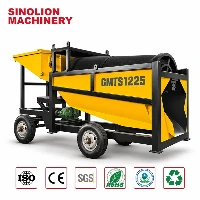


Learning the composition of the trommel screen
Trommel screen is a rotary cylindrical mesh drum designed for size-based material separation. When mixed materials are fed into the drum, smaller particles fall through the mesh openings directly, while larger components move to the drum's end for separate collection. This efficient process is widely applied in industrial material screening.This process is commonly used for screening:
Soil / Sand / Mulch / Wood Pellets / Wood Chips / Compost / Domestic Waste and Other Materials

Trommels deliver exceptional performance for processing moisture-rich materials, as well as mixtures containing paper, wood chips, plastic, or clay. Their continuous rotating motion effectively prevents mesh clogging and guarantees a consistent, reliable size separation process.
HOW DOES A TROMMEL SCREEN WORK?
LOAD HOPPER
Material feeding process for trommel drums starts with loading raw materials into the dedicated hopper, which then transfers them to the rotating drum via an integrated conveyor system. The material feed rate from the hopper to the drum is a pivotal factor that directly dictates the overall screening efficiency. Overloading the drum - a condition where material fill exceeds approximately 40% of the drum's width - can cause valuable fine particles to be lost alongside oversized materials, leading to mandatory reprocessing or even complete drum stalling.
TROMMEL SCREENING PROCESS
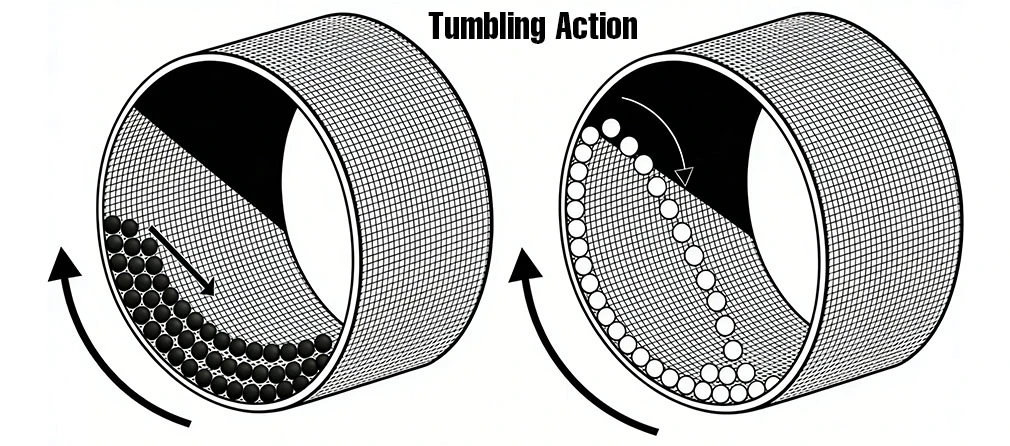
Once inside the rotating trommel drum, raw materials undergo continuous tumbling and aeration. This dual action effectively dries sticky substances and breaks up stubborn material clumps. When combined with the drum's precision mesh openings, this motion enables smaller particles to fall through the screen, while larger components proceed uninterrupted to the drum's discharge end. Rotation speed is a critical factor for efficiency: a too-slow drum can cause materials to clump together, significantly reducing screening performance. Conversely, excessive rotation speed can hinder proper size separation, as fine particles may remain suspended in the air column instead of passing through the mesh openings.

WHY CHOOSE A TROMMEL OVER A SCALPING SCREEN?
Each advantage is optimized with front-loaded core keywords and clear comparative logic, ideal for conversion-focused product pages.
1. Superior Wet & Sticky Material CompatibilityTrommels outperform flat deck scalping screens in processing moist, clay-rich, or sticky material streams. Their unique rotating design effectively prevents costly mesh blockages that are common with static flat screen setups.
2. Enhanced Fines Recovery EfficiencyThe continuous tumbling motion of a trommel screen maximizes the passage of undersized particles through the mesh. This delivers significantly improved fines separation and recovery rates compared to traditional vibratory scalping screens.
3. Minimized Wear & Reduced Maintenance CostsUnlike scalping screens that rely on violent vibration to process materials, trommels use gentle rotation. This eliminates high-impact forces on the screening surface, resulting in far less wear and tear and substantially lower long-term maintenance requirements.
4. Extended Material Residence Time for Precise SeparationTrommels provide a longer screening residence time for all feedstocks. This ensures superior separation accuracy, making them particularly well-suited for complex mixed waste streams that demand precise classification.
5. Low-Noise & Low-Vibration OperationIn contrast to high-frequency vibratory scalping screens, trommels operate with minimal noise and vibration. This quiet, stable performance makes them the perfect choice for noise-sensitive environments such as urban recycling facilities or residential proximity sites.
6. Greater Versatility for Diverse Material TypesTrommels excel at efficiently screening irregularly shaped, moisture-variable materials including compost, wood chips, and topsoil. These material types often cause operational issues and inconsistent results for standard scalping screens.
WHICH TROMMEL IS RIGHT FOR YOU?
Choosing the right trommel screen for your specific application is the cornerstone of achieving optimal operational performance and long-term cost efficiency. To make an informed decision, focus on these four critical considerations:
1. Production Requirements – What is the target throughput capacity the operator aims to achieve? This fundamental metric directly dictates the minimum size and power rating of the trommel you select.
2. Material Type – What specific materials will the equipment process? Moist, sticky, clay-heavy, or dry material streams each require tailored trommel drum specifications, including mesh size, screen material, and internal design.
3. Site Restrictions – Does the job site have sufficient space to accommodate the trommel's operation? Key space-related questions include: Is there enough room for the equipment itself? Is the site too constrained for stockpiling screened materials? And is there ample access for loading feedstocks into the trommel.
4. Budget Considerations – The recommended trommel equipment must align with the client's budget constraints while still guaranteeing the required levels of screening efficiency, productivity, and durability.
Trommel drum size is a direct driver of screening performance: a larger-diameter drum boosts efficiency by extending material retention time inside the screening chamber. The more frequently materials drop to the screen bottom, the higher the likelihood of effective size separation. For difficult-to-screen materials or applications with stringent high-separation requirements, a longer trommel drum will consistently deliver superior results.
Of course, whatever your specific requirements may be, Zhongshi will always strive to fully meet them.